Cleaning sustainably doesn’t mean buying a cupboard full of new green products. Honestly, it’s usually the opposite. It’s using fewer things, reusing what you can, and reaching for a few simple staples instead of a different spray for every surface. Here’s a practical, room-by-room way to clean a little greener without making it complicated.
A few basics that work everywhere
Before the room-by-room stuff, three things that cover most jobs:
Microfiber or a good reusable cloth instead of paper towels. It picks up more, and you wash it instead of binning it.
Refillable bottles so you’re not buying a new plastic trigger every time.
Simple staples like white vinegar, baking soda, and dish soap handle a surprising amount.
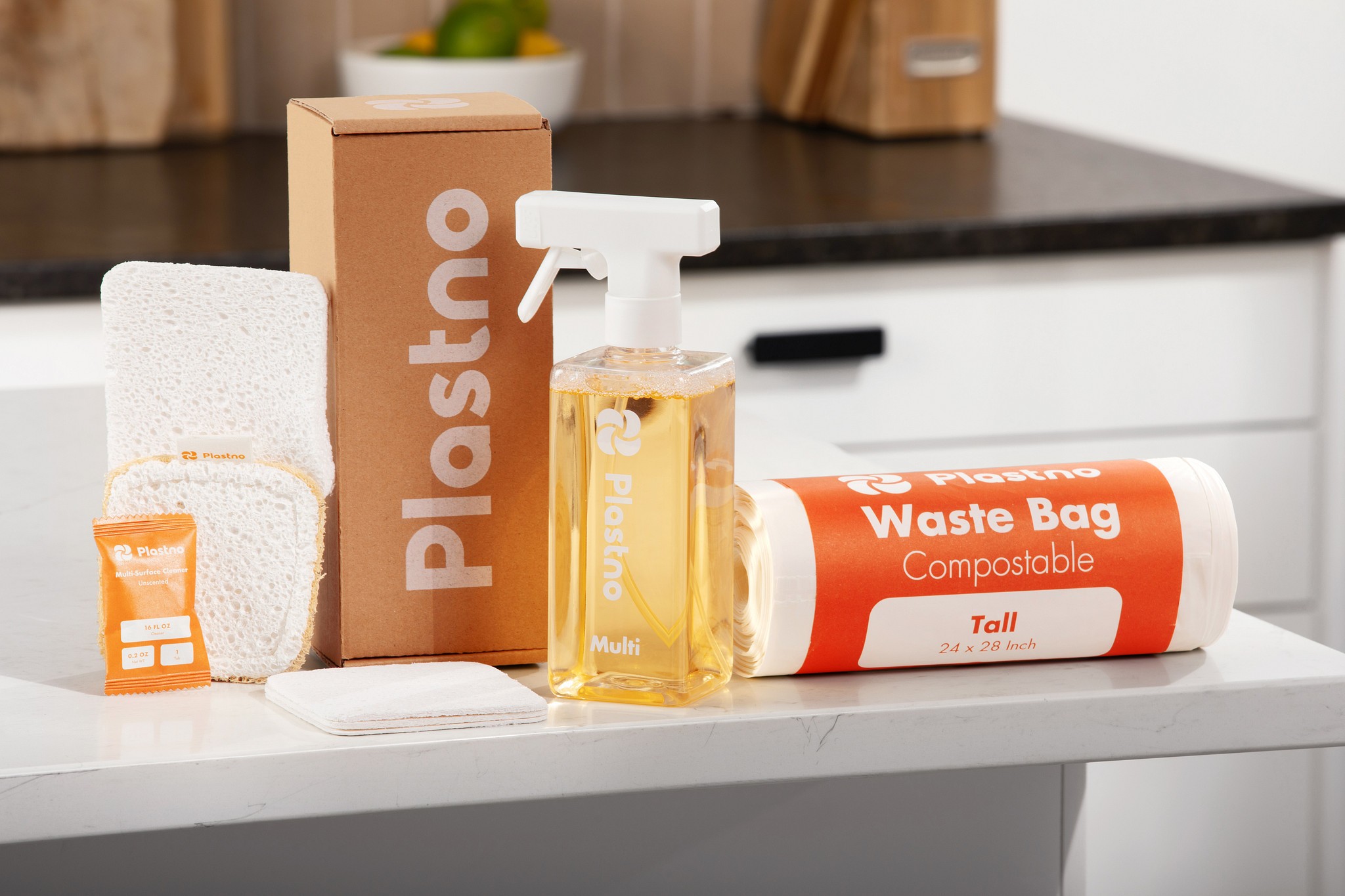
You don’t need all of it at once. Just swap things as they run out. If you’d rather start with supplies made for this, our refillable cleaning range over at Plastno is built around reusing instead of rebuying.
Kitchen
The kitchen is where the products tend to pile up. A reusable cloth and a multi-surface cleaner handle the counters, the stovetop, and the table. Baking soda is your friend for anything stuck on. For the sink, a sprinkle of baking soda and a rinse does more than you’d think. Keep one cloth for surfaces and a separate one for dishes so you’re not spreading grease around.
Bathroom
Bathrooms tempt you into buying a product for every single thing, and you really don’t need them. One multi-surface cleaner does the sink, counter, and tub. Baking soda scrubs the grimy bits, and a little vinegar helps with hard-water marks on taps and glass. Swap paper wipes for a cloth you can wash and reuse.
Living areas
Mostly this is dust and floors. A slightly damp microfiber cloth grabs dust instead of just pushing it around, and you skip the aerosol spray. For floors, a refillable mop or a bucket with a bit of cleaner beats single-use mop pads. Open a window while you go too, fresh air does more for a stuffy room than any fresh-linen spray.
Bedrooms
Wash the bedding on a regular rotation, air the room out, and dust surfaces with a reusable cloth. That’s genuinely most of it. The simpler you keep it, the more likely it gets done.
Laundry
Laundry is an easy place to cut waste. Wash full loads on a cooler setting, skip the single-use scent boosters, and swap dryer sheets for wool dryer balls you reuse for years. Line-drying when you can saves energy and is gentler on your clothes, so they last longer too.
Floors everywhere
Vacuum regularly so dirt doesn’t grind in, then damp-mop hard floors with a refillable mop. Most floors don’t need a heavy dose of cleaner. A little goes a long way, and using less means less rinsing and less waste.
Skip the greenwashing
Plenty of products slap natural or eco on the label without much behind it. If you want to actually know what’s in something before you buy it, that’s worth a quick check. Plastnofy, a chore app with a built-in product scanner, lets you snap a photo of a cleaning product and see whether it’s a genuinely sustainable choice, packaging and all, and it suggests a cleaner swap if it isn’t. And when you snap a mess to create a chore, it shows you a more sustainable way to clean it, so the greener choice is the easy one. If you’re weighing up apps in general, here’s how it fits among the best apps for household chores. Download Plastnofy free on the App Store or Google Play.
Start with one or two swaps, not a whole overhaul. A reusable cloth and a refillable bottle already cut a lot of waste, and the rest tends to follow from there.