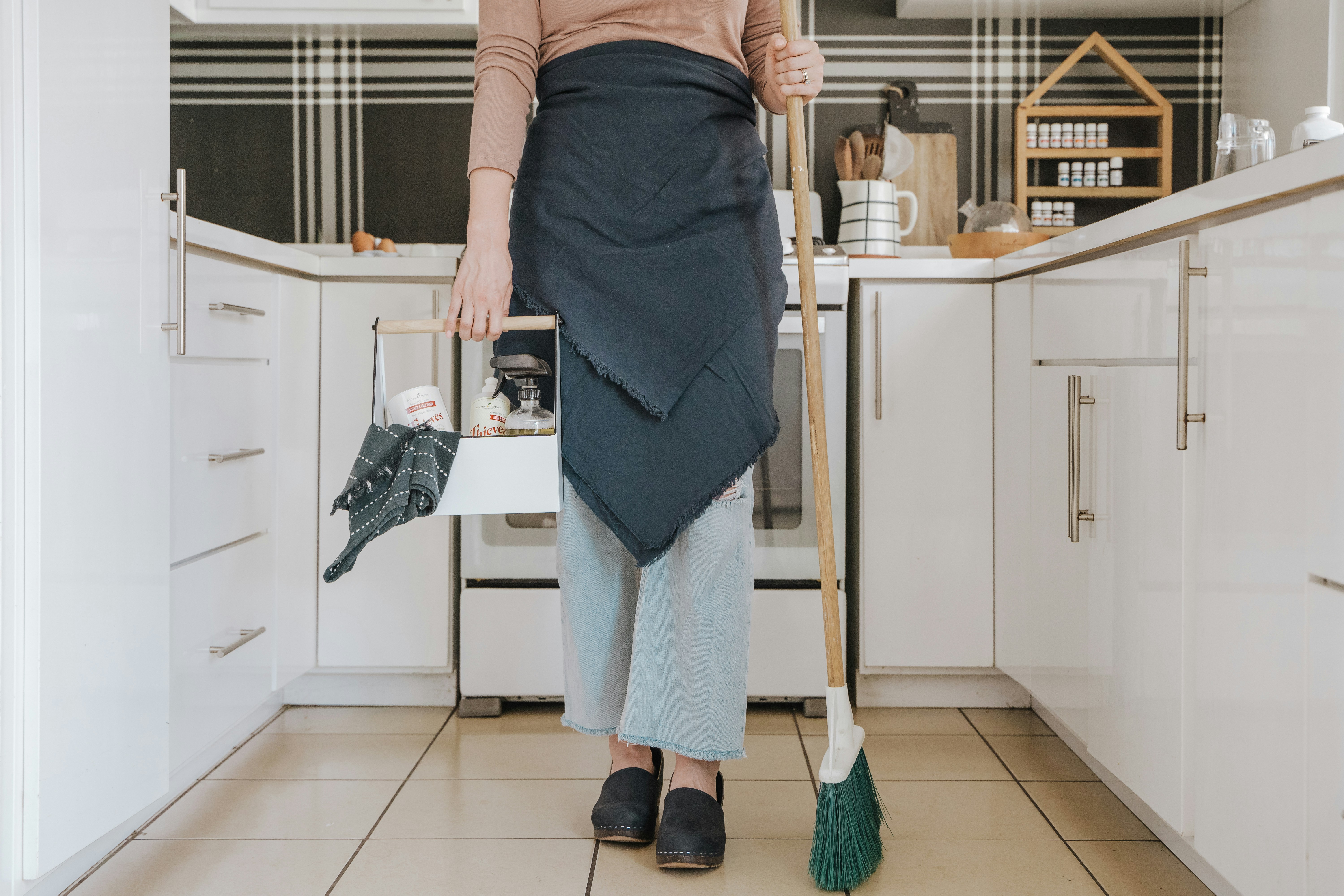
The default parent is the one everyone goes to first: for snacks, permission slips, lost shoes, and "where's the...?" It's the parent who carries the family's logistics in their head, and it wears you down because it never switches off. The way out isn't trying harder. It's moving what you know out of your head so the other parent can own whole areas without asking you. For the home side of it, we'd start with Plastnofy, the chore app we make.
How Plastnofy takes the home half off the default parent
Plastnofy won't remember picture day. What it can do is take the house off one person's plate.
Snap a photo of a mess, Plastnofy creates the chore and shows you a more sustainable way to clean it. Each chore lists the cleaning supplies you own that fit the job, so the other parent can see what to use instead of asking where the spray went. Assign chores to each other (sharing is free for two people), and the reminder goes to the person doing it, not to you. Set repeating chores once and they come back on their own. Pickup reminders tell you the night before trash and recycling day, and if nobody's sure what goes where, the waste scanner answers based on your city's rules.
Download Plastnofy free on the App Store and Google Play.
How someone becomes the default parent
It rarely starts as a decision. One parent was home more in the early months, learned where everything lives, and started noticing first. After that, asking them is faster than looking, so everyone does. Each time it happens the pattern gets a little stronger, until one person is running the house and the other is "helping." It's the mental load of running a home, concentrated in one parent.
Signs you're the default parent, and what to hand over
The sign | What to hand over |
|---|---|
Everyone asks you where things are | A shared list where each chore shows the supplies it needs |
You're the only one who knows bin day | A pickup reminder on both phones, and the trash as one person's job |
You buy every cleaning and household product | The supply shelf, including deciding which products are the greener pick |
You notice the mess before anyone else | Photos into a shared list, split by room |
Kids come to you even when the other parent is home | Set off-duty time when the other parent is the default |
How to stop being the default parent
Hand over whole areas, not single tasks. "You own laundry" means noticing, doing, and restocking, not folding when asked.
Include the green decisions. If you're the one who knows which cleaner is the sustainable pick or what can be recycled, put that knowledge where the other parent can see it, or it stays yours forever.
Step back and let it be done differently. If you redo it, you're still the default.
Check in for five minutes a week. Swap anything that isn't working before it becomes resentment. A shared chore chart for adults makes this quick.
Common questions
What does being a default parent mean?
It means you're the first stop for your kids' and household's needs, and the one who tracks the logistics: schedules, supplies, chores, and what's coming next.
Why is one parent usually the default?
Usually because they did more of the early caregiving, so they learned the routines first and everyone got used to asking them. Historically that has most often been mothers, but it can be either parent. It's a habit, not an ability, so it can change.
Is being the default parent exhausting?
Many people say it is, because the role never really clocks off. Sharing whole areas, not single tasks, is what lightens it.
The bottom line
You become the default parent by knowing where everything is and what comes next. You stop by moving that knowledge somewhere both parents can see it, handing over whole areas, the greener choices included, and letting the other parent run them their way.