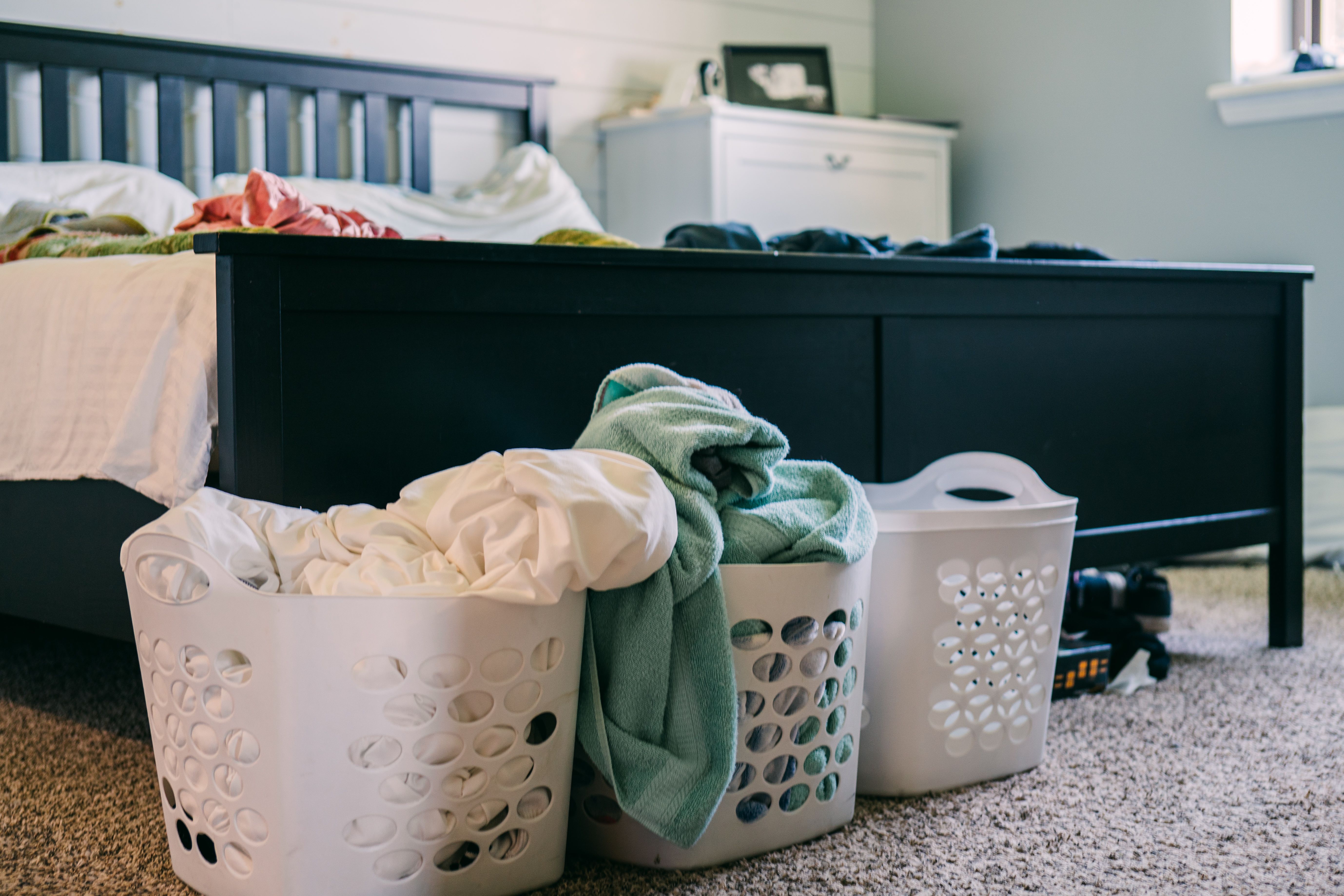
If your house is messy and you have ADHD, it isn’t laziness. It’s that keeping a home tidy leans on the exact skills ADHD makes harder: starting a task, holding it in mind, and picking up where you left off. And the reason it never stays clean is that the system for keeping it clean usually lives in your head, which is the one place ADHD can’t reliably store it. Here’s what’s actually going on and how to break the cycle, starting with the app we’d use.
Why ADHD makes your house messy
A messy house with ADHD comes down to executive function, the mental tools for planning, prioritizing, and following through. When those are running on low, a few very normal things happen:
Out of sight, out of mind. If a task or item isn’t in view, it drops off your radar, so half-finished jobs and put-away piles just stop registering.
Task paralysis. You look at a full room, can’t find the first step, and freeze, so nothing gets started at all.
Time blindness. A ten-minute tidy feels like an hour in your head, so you avoid it.
Walking away. You start something, get pulled elsewhere, and the mess sits there, because the reminder to come back is gone.
None of that is a character flaw, and it isn’t a diagnosis of anything. It’s just how an ADHD brain tends to handle an open-ended, low-urgency task like housework.
Why it keeps coming back
Here’s the part most advice skips. You can blitz-clean the whole place on a good day, and a week later it looks the same. That’s not failure, it’s the predictable result of a system that depends on you remembering. Motivation-based tidying works right up until the motivation is gone, and then there’s nothing external holding the recurring reset. The mess comes back because the plan for preventing it was never anywhere you could see it. Fix that, and the cycle changes.
Where Plastnofy fits
This is the gap Plastnofy is built for. Instead of keeping the whole system in your head, you snap a photo of a mess, Plastnofy creates the chore, and it shows you a more sustainable way to clean it. The pile becomes a visible task you can see and check off, which is the cue an ADHD brain actually responds to. Set the recurring ones once and reminders bring the reset back on their own, so staying on top of it stops depending on your memory.
It works as a chore app for ADHD that turns the mess you’d forget into one clear thing to do, and it’s free to start. For the mechanics behind why a visible task beats a written list, we broke it down in our post on cleaning with ADHD and out of sight, out of mind, and we compared the main tools in our roundup of the best cleaning apps for ADHD.
Download Plastnofy free on the App Store and Google Play.
What makes it worse, and what actually helps
You don’t fight overwhelm with a bigger plan. You shrink the first move until it’s almost too small to avoid.
What makes it worse | What actually helps |
|---|---|
Trying to clean the whole house at once | Pick one micro-zone: a single surface or corner |
Open-ended “clean until done” | Set a timer for 10 minutes and stop when it rings |
Storing the routine in your head | Let recurring reminders hold the reset for you |
Buying more bins and disposable supplies | Keep one reusable set within reach where you use it |
Waiting to feel motivated | Turn the mess into a visible task and start there |
A low-shame routine that holds
The goal isn’t a spotless home, it’s a system that survives a bad week. A few habits do most of the work:
Handle one visible zone, not the whole house.
Photograph the mess so it becomes a task instead of a vague dread.
Put the recurring stuff on repeat so it resurfaces without you tracking it.
Keep reusable supplies where you actually use them, so starting takes no setup.
Clean alongside someone (in person or on a call) if focus is hard that day.
Common questions
Why is my house so messy with ADHD?
Because tidying depends on executive-function skills (starting, planning, following through) that ADHD makes harder, and because anything out of sight tends to leave your mind. It usually isn’t about effort or caring, it’s that the task never stays on your radar long enough to finish.
Do people with ADHD struggle with clutter?
Often, yes. Clutter builds up when items stay out because “out of sight, out of mind” makes putting things away feel risky, and when deciding where everything goes is its own draining task. Open storage and one visible cue per task tend to help more than complex filing systems.
How do I stop my house from getting messy again?
Move the upkeep out of your head. A one-time clean won’t hold, but recurring reminders and a visible, repeatable reset will, because the system no longer relies on you remembering to run it.
Is a messy house a sign of ADHD?
It can be one piece of the picture, but a messy house on its own doesn’t mean anything by itself, plenty of people are messy without ADHD. This is lifestyle information, not a diagnosis, and only a qualified professional can assess ADHD.
The bottom line
A messy house with ADHD is about how your brain handles open-ended tasks, not how much you care. It keeps coming back because the system lived in your head. Make the tasks visible, let reminders carry the recurring reset, and start with one small zone, and the cycle finally has somewhere to break.