Most of us have a cabinet with half-used sprays and a bottle of something we forgot we bought. The good news: a lot of it can go right down the drain. The important part: some of it never should. Here’s how to get rid of old cleaning products safely, without pouring the wrong thing into your sink or your trash.
The one rule that matters: water-soluble or solvent-based
Almost every disposal question comes down to this. If a cleaner dissolves in water, like most all-purpose sprays, dish soap, and glass cleaner, you can usually pour it down the drain with plenty of running water, the same way it goes down when you use it. If it’s solvent-based, like metal polish, wood wax, or a drain opener, it does not belong in the drain or the regular trash. Those go to a household hazardous waste facility. When you’re not sure which one you have, treat it as hazardous and check.
How to dispose of each type
Here’s the quick version by product:
Product | How to get rid of it | Notes |
|---|---|---|
Water-soluble liquids (all-purpose, dish soap, glass cleaner) | Down the drain with running water | A little at a time |
Powders (scouring powder, oxygen bleach) | Down the drain with plenty of water, or the trash | Small amounts so they don’t clump |
Solid cleaners (bar soap, toilet blocks, scouring pads) | Household trash | Fine as-is |
Chlorine bleach and ammonia | Down the drain with lots of water, one at a time | Never mix the two, the fumes are dangerous |
Solvent-based (metal or wood polish, waxes, drain openers) | Household hazardous waste facility | Never the drain or regular trash |
Aerosol cans | Hazardous waste if not empty | Fully empty cans may be recyclable, check locally |
The stuff that must go to hazardous waste
A few products are worth pulling aside because they can harm the water system or the people handling your trash: solvent-based polishes and waxes, drain and oven cleaners, anything labeled corrosive or flammable, and most pesticides. Nearly every city has a household hazardous waste drop-off, and many run collection days a few times a year. A quick search for “household hazardous waste” plus your city name will tell you where and when.
Before you toss it, use it up or pass it on
The greenest disposal is not disposing at all. If a product still works and you just don’t reach for it, finishing the bottle is the cleanest option. If you won’t use it, a neighbor, a community group, or a local shelter often will. That keeps a usable product out of the waste stream entirely.
Don’t forget the empty container
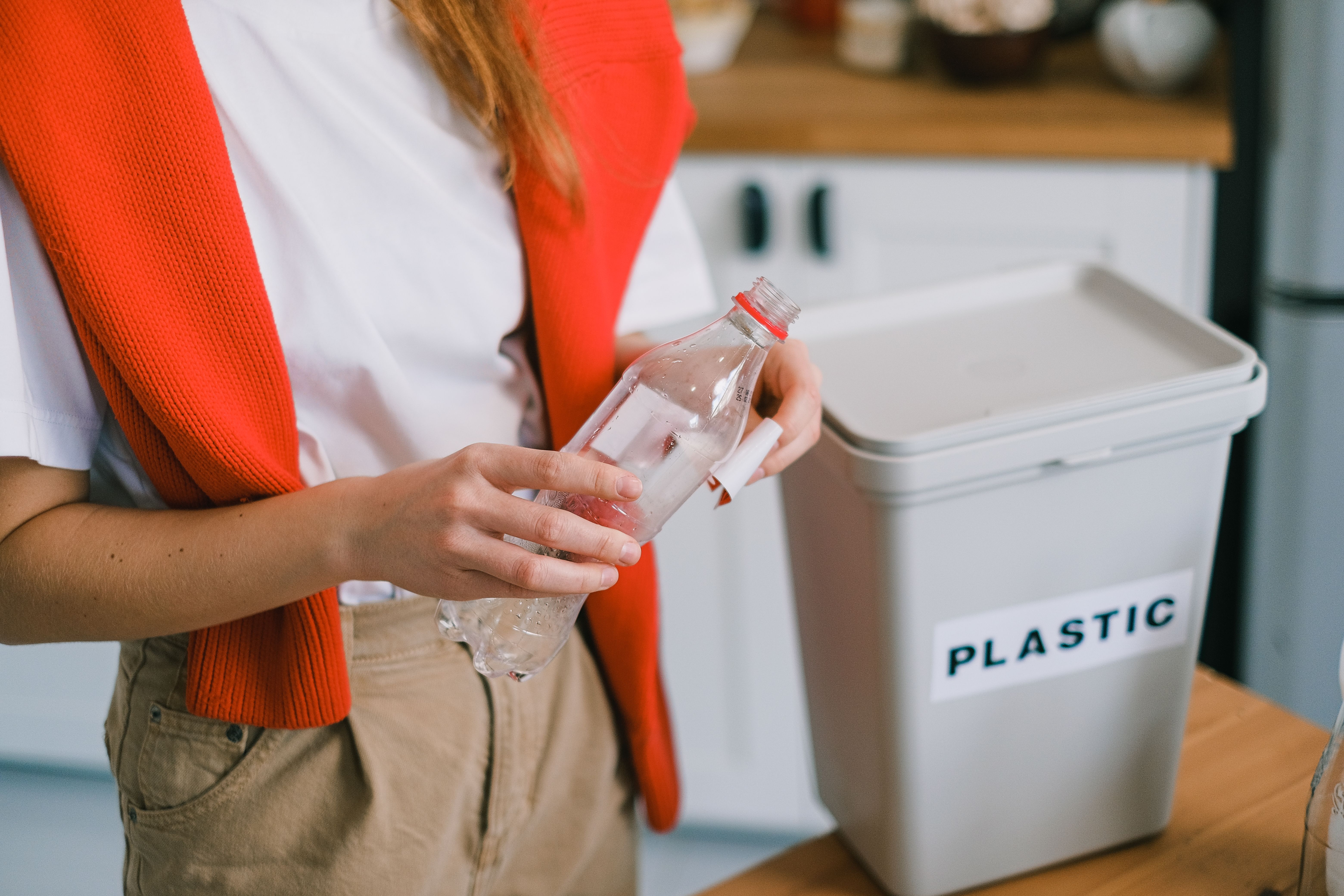
Once a bottle is empty, the cleaner and the packaging are two different disposal questions. Give the bottle a quick rinse and recycle it if your area takes that plastic. If you’re not sure what the container is made of, the recycling number on the bottom tells you, and whether it’s likely to be accepted where you live.
The easy way to check
If you’d rather not look up every item, that’s where an app helps. With Plastnofy, you point your camera at a product or its empty container and it tells you how to handle it, sorted into recycle, compost, return, landfill, or a special drop-off, with the quick steps and based on your actual city. You can also scan a cleaning product to see how sustainable it is before you buy the next one. It’s part of a sustainable cleaning app that also turns your messes into chores, and it’s free to start.
Download Plastnofy free on the App Store and Google Play.
The bottom line
Water-soluble cleaners can usually go down the drain with running water. Solvent-based ones go to hazardous waste, never the sink or the bin. Use up what you can, pass on what you won’t, and recycle the empty container. When you’re stuck, a quick scan beats a guess.