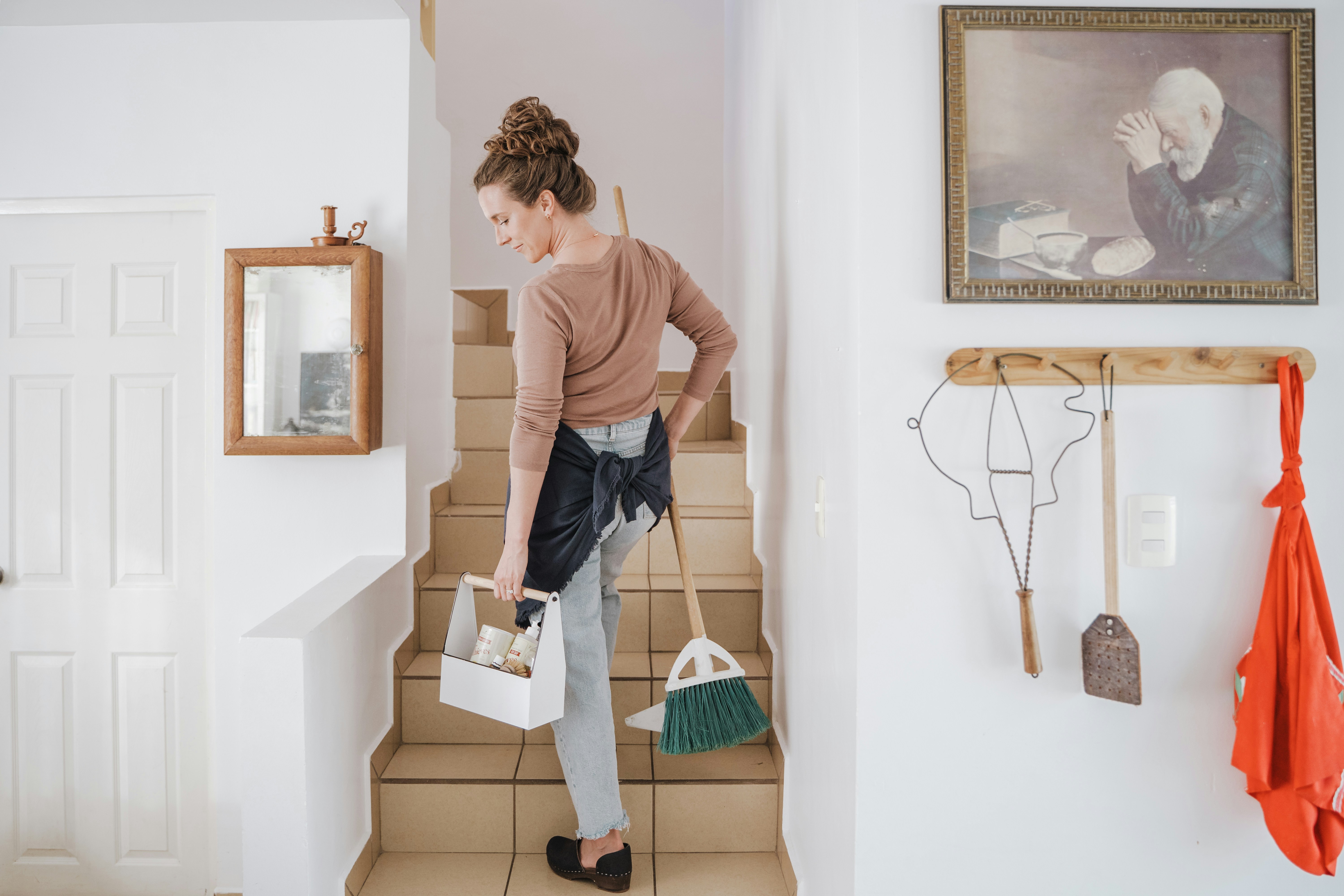
Invisible labor is the unpaid, unseen work that keeps a home running: noticing, planning, remembering, and deciding. It's invisible because it leaves no trace. A clean counter shows; knowing the counter needed cleaning doesn't. The fix is to make that work visible so it can be shared, and we'd start with Plastnofy, the chore app we make, because it puts the household's work somewhere everyone can see it.
How Plastnofy makes invisible labor visible
A lot of this work never leaves one person's head. Of 64 people who told us how they track chores when they joined Plastnofy, 29 said it's all in their head.
Plastnofy moves it out. Snap a photo of a mess, Plastnofy creates the chore and shows you a more sustainable way to clean it, and everyone in your home sees the same list, who did what, and what's coming up. Repeating chores come back on their own, so remembering stops being a person's job. Finished chores add to your household's plastic-saved total, so the effort shows up as a number instead of disappearing. Sharing is free for two people.
Download Plastnofy free on the App Store and Google Play.
Examples of invisible labor at home
Type | Examples | How to make it visible |
|---|---|---|
Noticing | The bathroom is overdue, the dish soap is low, the fridge needs clearing | Photograph it into a shared list |
Remembering | Bin day, changing the sheets, the filter nobody thinks about | Repeating chores with reminders |
Planning | Meals, who's doing what this week, when the deep clean happens | A five-minute weekly check-in |
Researching | Which cleaner to buy, what works on which surface | Save the answer where both of you can see it |
Green decisions | Is this recyclable here, does it need rinsing, is this product a sustainable pick | Scan it and share the answer |
Emotional | Keeping chore talk from turning into a fight, reminding without nagging | Assigned chores that remind the person directly |
The green invisible labor nobody counts
Living more sustainably adds a layer of invisible work. Someone reads the labels, learns what your city actually recycles, rinses the jars, sorts the bins, remembers the reusable bags, and keeps track of the compost. It usually falls on whoever cares most, and it rarely gets noticed.
It's easier to share when the answers aren't stuck in one head. In Plastnofy, scan a cleaning product and you get a sustainable or not sustainable verdict, plus a swap if it isn't. Scan something you're about to throw out, and it tells you which bin it goes in based on your city's rules. Pickup reminders come the night before collection day. Now anyone in the house can make the green call, not just the person who did the research.
How to make invisible labor visible in your home
Do a one-week photo audit. Every time you notice something that needs doing, snap it. By Sunday you'll both see the pile that was being tracked silently.
Hand over whole categories. Give one person the bins, recycling included, from noticing to doing.
Make finishing visible. Thanks, a shared list, or a running total all count.
Talk about the thinking, not just the doing. Our post on the mental load of running a home covers how to start that conversation, and if you have kids, the default parent is the same problem in parent form.
Common questions
What are examples of invisible labor?
At home: noticing what needs cleaning, remembering bin day, planning meals, researching which products to buy, figuring out what's recyclable, and managing the household's moods about chores.
What is invisible labor in a relationship?
It's the behind-the-scenes work one partner does to keep the home running that the other doesn't see, like tracking supplies, remembering recurring chores, and deciding what needs doing next.
Is invisible labor the same as the mental load?
They overlap. The mental load is the thinking part (noticing, planning, remembering). Invisible labor is the wider idea of all the unseen work, including the emotional side and the physical jobs nobody notices getting done.
The bottom line
Invisible labor isn't a lack of effort. It's effort nobody can see. Make it visible with photos and a shared list, count the green work too, and hand over whole categories, and it stops being one person's quiet second job.